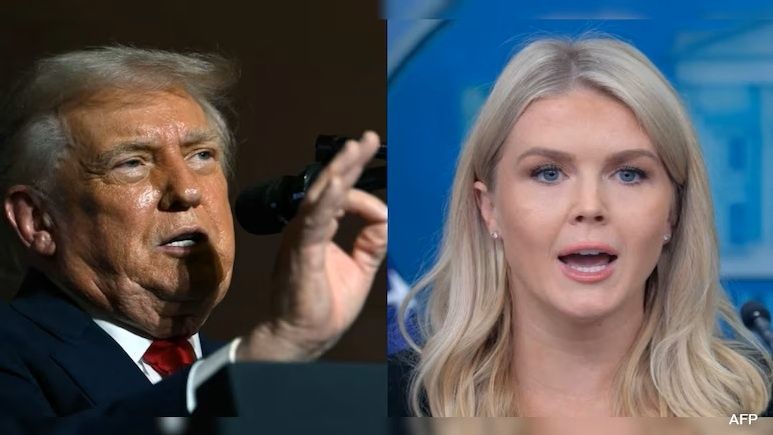
Trump’s Praise for Karoline Leavitt Sparks Controversy: “Lips Like a Machine Gun”
“It’s that face, those lips” comment draws sharp reactions
US President Donald Trump recently praised his White House Press Secretary, Karoline Leavitt, using a remarkable — and widely criticised — compliment. During a media interaction, Trump said:
“It’s that face. It’s that brain. It’s those lips — the way they move. They move like she’s a machine gun.”
He added that she had “become a star” and called her “the best press secretary anyone has ever had.”
Leavitt, 27, is the youngest person to serve as his press secretary and holds a prominent public-facing role since Trump’s return to office.
Reaction & Concerns Over the Remarks
- Many people — on social media and in public discourse — described Trump’s comment as inappropriate and objectifying, arguing that it reduces a high-ranking official to her appearance rather than her work or competence.
- The remark triggered comparisons to past controversies when Trump commented on women’s looks rather than their professional roles. Observers asked whether such behaviour from a sitting president is acceptable.
- Critics also pointed out that such comments can create an uncomfortable, disrespectful environment — especially when made publicly and directed at subordinates.
Context: Leavitt’s Role and Why the Comment Is Sensitive
- Karoline Leavitt serves as Press Secretary under Trump’s current administration. She is responsible for briefing the media and representing the White House publicly.
- Trump’s praise came shortly after Leavitt called for him to receive a Nobel Peace Prize, claiming he had brokered multiple ceasefires in his recent tenure.
- Given the power dynamics — President and Press Secretary — many observers find such remarks problematic, arguing that they blur professional boundaries.
What to Watch Next: Fallout and Public Conversation
- The comment revived debates about sexism, respect in workplace, and the limits of public remarks by politicians — especially those in power.
- Media watchdogs and public interest groups may demand clearer norms regarding how officials address or talk about subordinates, especially in high-profile roles.
- For Leavitt, the spotlight now isn’t just on her job performance — but also on being part of a public controversy over respect and propriety.